
Markets Resilient Amid AI Questions


Most equity sectors were higher last week, except for tech and industrials. For the first time since June, technology stocks came under pressure after questions about
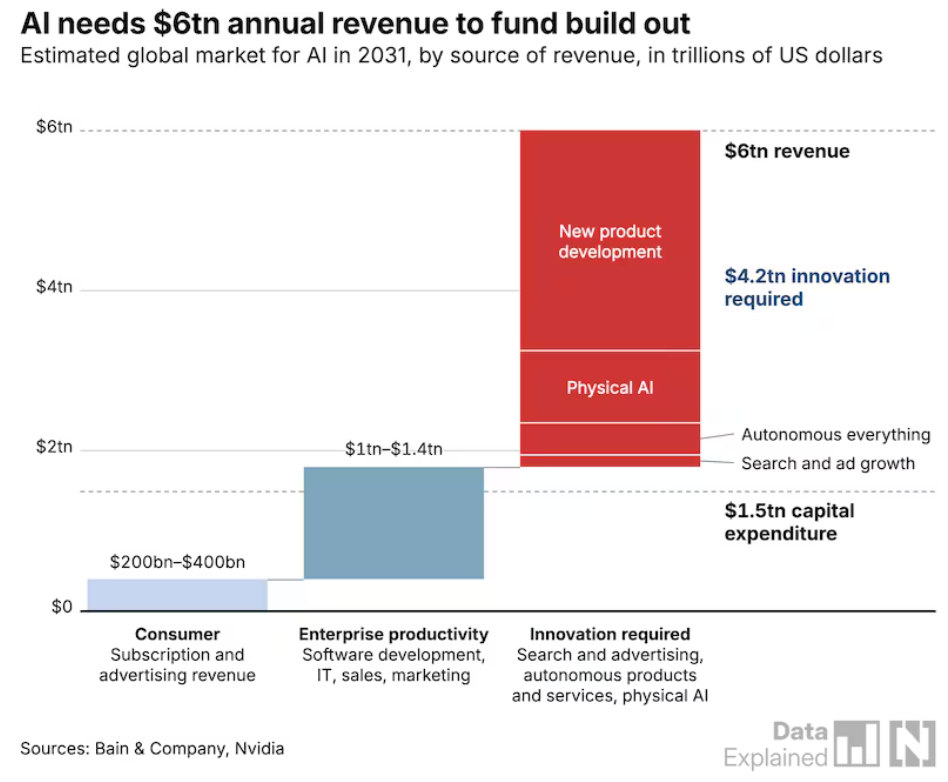
financing and revenues on AI were raised. According to a recent report by Bain & Company, the annual revenue required from AI will need to reach $6 trillion by 2031 in order to fund the AI buildout.1 This comes on the heels of a report that OpenAI's annualized revenue is at $50 billion - about $20 billion less than originally communicated.2 Tech stocks sold off on Thursday as the report circulated. We have mentioned over the past few weeks the interconnected nature of several AI / technology companies, so revenue generated from AI may bear some scrutiny moving forward.
Markets appear to be in risk-on mode as investors are taking on leverage to access exposure to equities. Borrowing by hedge funds has substantially increased over the
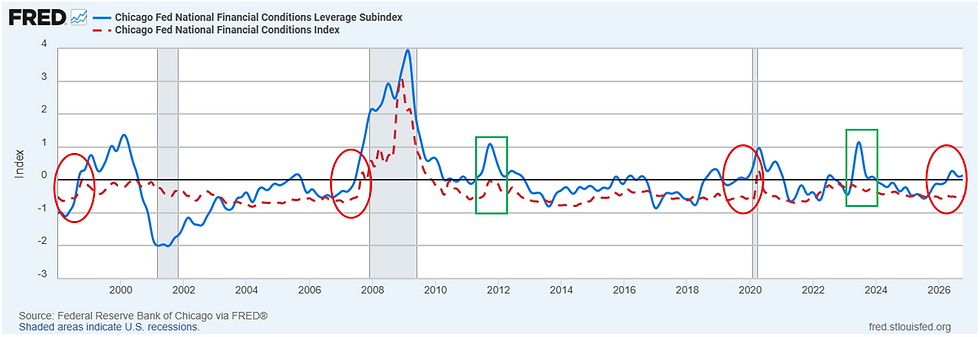
past several years, seeing leverage more than double among hedge funds since 2014.3 In addition, the amount of margin employed by investors, relative to GDP, has nearly doubled over the past couple of years, even exceeding margin employed in 1999.4 The Chicago Federal Reserve's National Financial Conditions Index has a subindex for leverage which measures more than 35 market leverage indicators. As in 1999, 2007, and 2019, the Leverage subindex has reached positive territory (tightening) before the broader index.5 While this has not always preceded market declines and past patterns may not repeat, it bears watching.
Investors will likely be interested in the inflation data released this week. Both the Consumer Price Index and the Producer Price Index reports for September will be
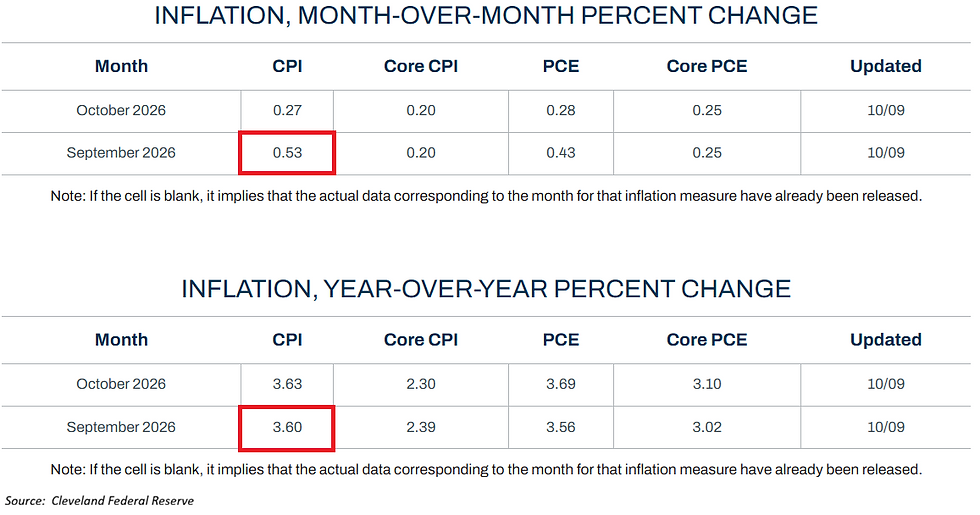
published this week and could have bearing on the Fed's next rate decision. According to the Cleveland Federal Reserve, the expectation is for the CPI to rise both on a month-over-month and year-over-year basis.6 Currently, the market expects the Fed to leave rates unchanged at their next meeting on October 28th.7 If the Cleveland Fed is correct, however, a rise in inflation from 3.4% in August to 3.6% in September could change the expectation of markets. Equities could trade a little choppy this week if inflation data changes the outlook on the Fed's rate decision.
Disclosures
The information contained herein is for informational purposes only and is developed from sources believed to be providing accurate information. The opinions expressed are those of the author, are for general information, and should not be considered a solicitation for the purchase or sale of any security. The decision to review or consider the purchase or sell of any security should not be undertaken without consideration of your personal financial information, investment objectives and risk tolerance with your financial professional.
Forecasts or forward-looking statements are based on assumptions, may not materialize, and are subject to revision without notice.
Any market indexes discussed are unmanaged, and generally, considered representative of their respective markets. Index performance is not indicative of the past performance of a particular investment. Indexes do not incur management fees, costs, and expenses. Individuals cannot directly invest in unmanaged indexes. The S&P 500 Composite Index is an unmanaged group of securities that are considered to be representative of the stock market in general.
Past Performance does not guarantee future results.

Comments